How to Stay Safe in Luxembourg
Introduction
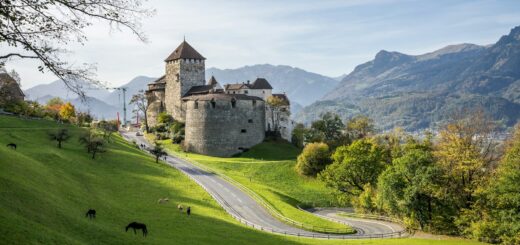
Luxembourg, Europe’s only Grand Duchy, is one of the world’s smallest sovereign states and its wealthiest per capita. The country — just 2,586 square kilometres, roughly the size of an average English county — is the home of European Union institutions (the Court of Justice, the European Court of Auditors, the European Investment Bank), a global financial centre, and a genuinely beautiful destination with a remarkable historical heritage. Luxembourg City’s stunning UNESCO-listed old fortifications, perched dramatically above the Alzette and Pétrusse valleys, represent some of the finest medieval military architecture in Europe.
Beyond the capital, the Luxembourg Ardennes offer rolling forested hills, medieval castles (Vianden Castle is among the best-preserved Gothic castles in Europe), and the beautiful Moselle wine region along the German border. Luxembourg’s multilingual character — Luxembourgish, French, and German are all official languages, and English is widely spoken — makes it unusually accessible for international visitors.
Luxembourg is consistently ranked among Europe’s safest countries. Low crime rates, professional law enforcement, and a stable, prosperous society characterise the security environment. Tourists face minimal risks and the main safety considerations are standard urban precautions and road safety.
General Safety Overview
Luxembourg has very low crime rates by any European standard. Violent crime is uncommon, and property crime (including petty theft) is lower than in most European capital cities. Luxembourg City’s tourist areas — the Old Quarter (Bock promontory and Chemin de la Corniche), the Place d’Armes, and the main shopping streets — are safe at all hours.
The main area of slightly elevated concern is the Gare (railway station) district, which has higher incidences of social problems (drug use, homelessness) than other parts of the city. This is a cosmopolitan area that is safe to walk through, but exercise standard urban awareness, particularly late at night.
Personal Safety and Crime Prevention
Standard urban precautions are sufficient throughout Luxembourg. Keep bags secured in tourist areas and on public transport. The main bus station area and the Gare district warrant extra awareness. Luxembourg City is generally very pleasant to walk in at any time.
- Standard bag security in tourist areas.
- Extra awareness near the Gare district after dark.
- Luxembourg City is very safe for solo travellers, including women.
Transportation Safety
Luxembourg has invested heavily in public transport: all public transport (buses, trams, trains) became entirely free of charge for all users in March 2020 — the first country in the world to make all public transport free. This excellent system covers the entire country comprehensively. Luxembourg drives on the right; road conditions are excellent. Speeding cameras are frequent.
- ALL public transport in Luxembourg is free — simply board without buying a ticket.
- Road conditions are excellent; speed cameras are widespread.
- Taxis are metered and regulated.
Health and Medical Safety
Luxembourg has excellent healthcare. The Centre Hospitalier de Luxembourg (CHL) is the main hospital. EU citizens with EHIC access state healthcare. Tap water is safe and excellent throughout Luxembourg.
- EHIC (EU citizens) or travel insurance.
- Excellent healthcare facilities.
- Tap water is safe throughout Luxembourg.
Natural Hazards
Luxembourg has no significant geological hazards. The Ardennes region can experience heavy snowfall in winter, requiring standard precautions for driving on forested hills. The Our, Sûre, and Moselle rivers can experience flooding during heavy rainfall.
Digital and Financial Safety
Luxembourg uses the euro. Card payments are universally accepted. ATMs are plentiful. Internet connectivity is excellent. Luxembourg’s banking sector is a major global financial centre, and standard cybersecurity precautions apply.
- Euro and universal card acceptance.
- ATMs widely available; shield PIN.
- Free Wi-Fi available throughout Luxembourg City centre.
Common Tourist Scams and How to Avoid Them
Luxembourg has very few tourist-oriented scams. The following minor issues are the most commonly reported.
Overpriced Tourist Restaurants
Restaurants in the immediate vicinity of Place d’Armes and the most tourist-heavy sections of Luxembourg City’s Old Quarter charge prices significantly above the Luxembourg average.
How to Avoid: Walk two streets away from Place d’Armes to find better-value restaurants. Use Google Maps reviews to research value.
Short-Changing
In rare cases, tourists unfamiliar with euro denominations have been short-changed in busy tourist establishments.
How to Avoid: Familiarise yourself with euro denominations and always count your change before leaving.
Fake Charity Collectors
Occasional fake charity collectors operate in tourist areas of Luxembourg City.
How to Avoid: Decline unsolicited street charity requests from unknown collectors.
Cultural Awareness and Etiquette
Luxembourg’s culture is a unique blend of French, German, and uniquely Luxembourgish influences. The Luxembourgish language (Lëtzebuergesch) — which sounds somewhat like a melodic German — is the national language and a source of great pride; using even a word or two (“Moien” — hello; “Merci” or “Villmols Merci” — thank you) is warmly received.
Luxembourgers are typically formal in initial interactions and value politeness and discretion. The country’s remarkable multilingualism means that switching easily between languages is the norm; do not feel awkward about using French or English if you do not speak Luxembourgish.
- “Moien” (hello) in Luxembourgish is always appreciated.
- French, German, and English are all widely spoken.
- Tipping 10% in restaurants for good service is standard.
- Luxembourg’s national museum (MNHA) and the Casemates du Bock are excellent and free or low-cost.
Emergency Contacts
| Service | Number |
| Police | 113 |
| Ambulance | 112 |
| Fire | 112 |
| General Emergency | 112 |
Note: 113 = Police (non-emergency also reachable on 113); 112 = Ambulance and Fire. English-speaking operators are available.