How to Stay Safe in Latvia
Introduction
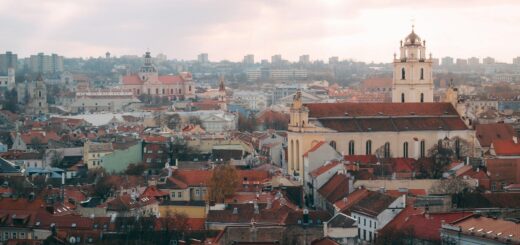
Latvia, the middle Baltic state, offers visitors one of Europe’s most beautifully preserved historic city centres, a spectacular natural coastline, and a fascinating cultural heritage shaped by centuries of German, Swedish, Polish, and Russian influence. Riga’s UNESCO-listed Old Town (Vecrīga) is a treasury of medieval architecture: the massive Daugava River at its edge, the Gothic St. Peter’s Church, the Riga Cathedral, the 13th-century city walls, and the extraordinary Art Nouveau district — the world’s most concentrated collection of Art Nouveau architecture, with over 800 buildings — make Riga one of Europe’s great architectural destinations.
Latvia is an EU and NATO member state with professional institutions and well-functioning public services. The country has a population of approximately 1.8 million and has been experiencing significant demographic challenges. Riga is the largest city in the Baltic states and a vibrant cultural centre.
Latvia is generally safe for tourists, but Riga has a very specific and long-standing tourist scam reputation — the “Riga bar scam” — that is widely regarded as the most notorious and brazen in Europe. Understanding this scam thoroughly is absolutely essential for any visitor to Riga.
General Safety Overview
Latvia has a moderate crime rate. Violent crime against tourists is uncommon but not absent. Petty theft — pickpocketing and bag snatching — occurs in Riga’s Old Town, the Central Market, the main train and bus station area, and on public transport. The Old Town at night has a mix of tourist-oriented bars and some rough edges; the bar scam (detailed below) is the most significant specific threat.
The areas around Riga Central Station and the Central Market warrant extra caution at night. The beach resort of Jūrmala (easily reachable by train from Riga) is safe and family-friendly. Latvian cities outside Riga are generally very safe and quiet.
Personal Safety and Crime Prevention
In Riga Old Town, the specific risk beyond standard pickpocket awareness is approach by strangers suggesting bar or club visits — this is the entry mechanism for the infamous bar scam. Be particularly alert to friendly strangers (of either sex) who approach tourists in the Old Town and suggest going “somewhere great nearby.”
ATM fraud (skimming) has been reported in Riga, particularly on standalone machines. Use bank-branch ATMs only.
- CRITICAL: Never follow strangers to a bar or club in Riga Old Town.
- Use bank-branch ATMs only; shield PIN.
- Keep bags secured in Old Town and around Riga Central Market.
- Be especially alert when leaving bars late at night in Riga.
Transportation Safety
Riga has a reasonable public transport system of trams, trolleybuses, and buses. The Bolt app operates in Riga and provides safe, transparent taxi pricing. Unmetered street taxis overcharge tourists. The train to Jūrmala is an easy and safe day trip. Road conditions in Latvia are variable outside the capital.
- Use Bolt for all taxis in Riga.
- Validate transport tickets; inspectors check frequently.
- Latvia drives on the right.
- Roads outside Riga can be narrow and poorly maintained.
Health and Medical Safety
Latvian healthcare is of reasonable standard; EU citizens with EHIC access state care. Riga has the best facilities. Travel insurance is recommended.
Tick-borne encephalitis is endemic in Latvia’s forests. TBE vaccination is recommended for anyone planning forest activities. Lyme disease is also present. Use repellent and check for ticks after forest visits.
- EHIC (EU citizens) or travel insurance.
- TBE vaccination recommended for forest activities.
- Use tick repellent and check for ticks.
- Tap water in Riga is safe to drink.
Natural Hazards
Latvia is flat with no significant geological hazards. Winter driving (November–March) is challenging due to ice and snow; winter tyres are mandatory. The Baltic Sea coast near Riga has strong currents and cold water in some areas. Ice on the Baltic can form in winter and is occasionally walkable between islands but requires local knowledge to verify safety.
Digital and Financial Safety
Latvia uses the euro. Card payments are very widely accepted. ATMs are plentiful; use bank-branch machines. Mobile coverage is good throughout Latvia. Free Wi-Fi is widely available in Riga.
- Card payments universally accepted.
- Use bank-branch ATMs.
- Download offline maps for travel outside Riga.
Common Tourist Scams and How to Avoid Them
Riga has the most notorious tourist bar scam in Europe. Every visitor must be aware of it.
The Riga Bar Scam — MOST CRITICAL WARNING FOR ALL RIGA VISITORS
This scam has been operating in Riga for over two decades and is consistently reported as the most financially damaging tourist scam in Europe. The mechanism: one or more individuals (often attractive women, but sometimes men or mixed groups) approach tourists in Riga’s Old Town — typically near the Dome Cathedral area, Līvu Square, or the main tourist pedestrian streets — and strike up friendly conversation. After a few minutes of warm interaction, they enthusiastically suggest going to a “great bar nearby.” The bar is run by the scam operation. Inside, unsolicited drinks, food, and other items are brought to the table and added to the bill. When the tourist attempts to leave, a bill of hundreds or sometimes thousands of euros is presented, backed by large, intimidating security staff who escort tourists to ATMs under duress. Victims have reported being physically prevented from leaving, having their phones confiscated, and being threatened until they pay.
How to Avoid: The only effective protection is to refuse absolutely to follow any stranger to any bar or club in Riga that you did not independently choose before the interaction. This rule has no exceptions, regardless of how friendly or persuasive the individual seems. If you are presented with an extortionate bill in Riga: stay calm; do not pay; photograph the bill; call Latvian police (110); contact your embassy; leave the establishment if you can do so safely. File a formal police report — do not accept assurances that “this will go away” with payment.
ATM Skimming
Skimming devices have been reported on ATMs in Riga, particularly in tourist areas of the Old Town.
How to Avoid: Use ATMs exclusively inside bank branch premises. Shield PIN completely. Check card slot for loose attachments before inserting card.
Taxi Overcharging
Street taxis in Riga overcharge tourists routinely; some drivers have no meters.
How to Avoid: Use Bolt app for all taxis in Riga without exception.
Accommodation Price Gouging
During major events in Riga (Eurovision, major music festivals), accommodation prices surge and some hosts charge far above the displayed rate or deny reservations to seek higher-paying alternatives.
How to Avoid: Book in advance through major platforms. Confirm all bookings in writing. Have printed documentation of confirmed prices.
Cultural Awareness and Etiquette
Latvian culture combines Baltic reserve with genuine warmth for those who make the effort to engage. Latvians are proud of their language (one of the oldest living Indo-European languages), their song and dance traditions (the Latvian Song and Dance Festival is one of the world’s largest singing events and a UNESCO Intangible Heritage), and their resilience as a nation that has maintained identity through centuries of foreign domination.
The Soviet occupation (1940–1941, 1944–1991) is a living memory for older Latvians and a defining national trauma. Latvia’s experience of Soviet occupation, Russification, and the deportations to Siberia are part of the essential context for understanding modern Latvia. The question of Latvia’s substantial Russian-speaking minority (approximately 25% of the population) has become more politically charged since 2022.
- Basic Latvian: “Labdien” (good day), “Paldies” (thank you).
- Latvia’s Soviet occupation history is a sensitive and important topic — approach with respect.
- The Latvian Ethnographic Open Air Museum is an excellent way to understand traditional culture.
- Tipping 10% is appreciated in restaurants.
Emergency Contacts
| Service | Number |
| Police | 110 |
| Ambulance | 113 |
| Fire | 112 |
| General Emergency | 112 |
Note: 110 = Police; 113 = Ambulance; 112 = Fire and General Emergency. English-speaking operators are generally available.