How to Stay Safe in Gabon
1. Introduction
Gabon is one of Central Africa’s most striking success stories in conservation—a small, oil-rich country that has protected approximately 90% of its territory as primary rainforest and established 13 national parks covering 11% of its land area. This makes it one of the world’s most conservation-forward nations. Loango National Park (‘Africa’s last Eden’) offers encounters with forest elephants surfing on beaches, hippos in the surf, gorillas, and sea turtles. Lopé National Park is a UNESCO World Heritage Site.
Gabon experienced a military coup in August 2023, ending 56 years of the Bongo family dynasty. The transitional military government has maintained relative stability in the capital Libreville, but the political situation remains uncertain. Most Western governments have updated their advisories to ‘exercise increased caution’ following the coup. Tourism infrastructure, while limited, is better than most of its Central African neighbours.
| ⚠ Post-Coup Uncertainty: Following the August 2023 coup, Gabon’s political situation is in transition. Curfews were imposed in the immediate aftermath and may be reimposed. Check current conditions and your government’s latest travel advisory before travel. |
2. Security Landscape
Libreville, the capital, has moderate crime—petty theft, bag snatching, and opportunistic robbery are present, particularly in the port area, markets (Marché Mont-Bouët), and at night. The area around the Monte Bouët market is one of the higher-crime zones in the city. Expatriate residential areas (Louis, Batterie IV, Pont de Gué Gué) are generally calmer.
Outside Libreville, crime is less prevalent but infrastructure is very limited. National parks require boat or small plane access—there are no tourist road networks through the forest. Port-Gentil (Gabon’s oil capital) is accessible by air or boat from Libreville and has a significant expat community.
| ⚠ Night Safety: After dark in Libreville, avoid walking alone—particularly near the port, markets, and on poorly lit streets. Use hotel-arranged transport. Armed robbery has been reported in several parts of the city at night. |
3. National Parks & Wildlife Tourism
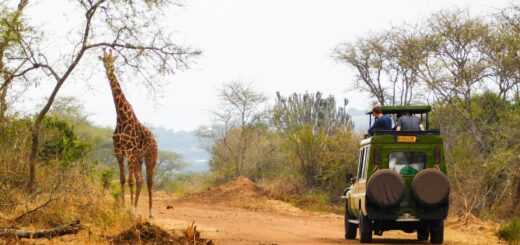
Gabon’s national parks are the primary tourist draw and are accessed through organised tours. Loango National Park (accessed via Omboué) offers extraordinary wildlife encounters—surfing hippos, forest elephants on beaches, western lowland gorillas, and nesting leatherback sea turtles. Lopé National Park is more accessible (4-hour drive from Libreville or train from Libreville to Lopé station).
Ivindo National Park has spectacular waterfalls (Kongou Falls) and forest elephants. Booking through reputable eco-tour operators (Gabon Untouched, Lango Lodge) is strongly recommended—these operators handle logistics, safety, and permits. Do not attempt national park access independently without local expert support.
| ✔ Best Wildlife Timing: Loango’s best period for forest elephants on the beach is July–September. Turtle nesting is October–March. Lopé is best December–January for ape activity. Book lodges well in advance—capacity is very limited. |
4. Transportation Safety
Libreville is served by Léon-Mba International Airport with connections to Paris, Brussels, Addis Ababa, and regional hubs. Road conditions in Libreville are variable; roads to the interior are generally poor to non-existent. Traffic in Libreville is congested and driving standards are erratic.
The Trans-Gabon Railway connects Libreville to Franceville via Lopé—a scenic and useful route for tourism. Domestic flights connect Libreville to Port-Gentil, Franceville, Lambaréné, and occasionally park access points. Boat transport on the Ogooué River is available but requires careful operator selection.
| ✔ Trans-Gabon Railway: The train journey from Libreville to Lopé or Franceville is an experience in itself—passing through dense equatorial rainforest. Book tickets in advance at the Libreville station. First class is recommended for longer journeys. |
5. Health & Medical Safety
Malaria is endemic throughout Gabon—antimalarials and DEET repellent are essential. Yellow fever vaccination is required. Typhoid, hepatitis, and other tropical diseases are present. Schistosomiasis is a risk in freshwater environments—do not swim in rivers or lakes. The Ebola virus was first identified near the Gabon-DRC border region; though no active outbreak, awareness is appropriate.
Medical facilities in Libreville include the Centre Hospitalier Universitaire de Libreville (public, limited), Hôpital d’Instruction des Armées, and some private clinics. Care is better than in most Central African countries but still limited. Medical evacuation insurance is recommended. In national parks, medical care is effectively non-existent—guides carry basic first aid only.
| ⚠ Freshwater Safety: Do not swim in Gabon’s rivers or lakes due to the risk of schistosomiasis (bilharzia) and other parasitic infections. Ocean swimming at patrolled beaches is safer but observe current conditions carefully. |
6. Common Scams & How to Avoid Them
| Scam Name | How It Works | How to Avoid It |
| Police Checkpoint Bribes | Officers at road checkpoints demand payments for document checks or fabricated violations. | Have document photocopies available. Stay calm. Request official documentation of any claimed violation. |
| Airport / Port Hustlers | Touts at Libreville airport offer unsolicited assistance then demand large fees. | Arrange transport through your hotel or tour operator before arrival. |
| Overpriced Taxis | Taxis have no metres; drivers quote tourist prices. | Negotiate fares firmly before getting in. Ask hotel for standard fare estimates. |
| Counterfeit FCFA Notes | Counterfeit Central African CFA francs passed at markets and exchange points. | Use official bank ATMs for cash. Examine high-denomination notes carefully. |
| Wildlife Permit Fraud | Fake permits for national park access sold by unofficial middlemen. | Book national park access only through official operators and the ANPN (national parks authority). |
| Accommodation Overcharging | Hotels inflate prices for walk-in foreigners significantly above booking rates. | Book all accommodation in advance through verified booking channels. |
7. Legal Considerations
Gabon’s legal system is based on French civil law. Homosexuality has been technically illegal since a 2019 law change (previously decriminalised); the law is unevenly enforced but LGBTQ+ tourists should exercise significant discretion. Drug possession carries serious penalties. Photography of military installations, the presidential palace, and government buildings is prohibited.
8. Cultural Awareness
Gabon has a distinctive culture influenced by Bantu traditions and French colonialism. French is the official language and widely spoken in cities. The Bwiti spiritual tradition—involving ceremonies with iboga (a psychoactive plant)—is an important indigenous practice. Respect ceremonial contexts. Christianity is widespread, and a mix of indigenous religions is practised.
| ✔ Conservation Values: Gabon is proud of its conservation achievements. Engaging genuinely with the park systems and local eco-tourism businesses—rather than trying to access wildlife independently—is both safer and more rewarding. The park infrastructure, while limited, is designed to show you extraordinary things. |
9. Emergency Contacts
| Service | Number / Info |
| Police Emergency | 1730 |
| Fire Brigade | 18 |
| Ambulance / SAMU | 1300 |
| CHU de Libreville | +241 76 21 44 |
| French Embassy Libreville | +241 01 79 64 00 |
| US Embassy Libreville | +241 01 45 71 00 |
| Gabon National Parks (ANPN) | +241 06 06 57 77 |
10. Pre-Departure Safety Checklist
- Check current travel advisory—note post-coup political situation
- Obtain Yellow Fever vaccination certificate
- Begin antimalarials before departure
- Purchase travel insurance with evacuation coverage
- Book national park lodges well in advance—capacity is limited
- Arrange all transport through verified operators
- Download offline maps for Libreville
- Pack DEET insect repellent, water purification tablets, and first aid kit
- Do not swim in rivers or lakes
- Carry cash in CFA francs—ATMs exist in Libreville but are not always reliable
- Register with your embassy before travel