Do I Need a Visa for Bhutan?
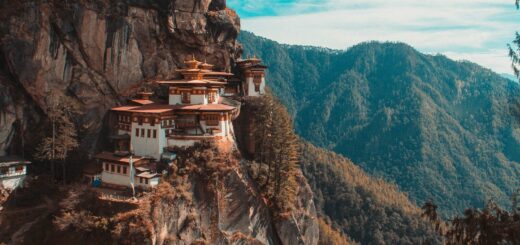
The Kingdom of Bhutan is one of the most unique and carefully managed travel destinations in the world. Nestled in the Eastern Himalayas between India and China, this small Buddhist kingdom is renowned for its pristine landscapes, ancient monasteries, vibrant culture, and its Gross National Happiness philosophy — a measure of national progress that places wellbeing above economic growth.
Unlike most countries, Bhutan does not pursue mass tourism. Its visa and entry system is specifically designed to limit visitor numbers while ensuring that those who do visit have an authentic, high-quality experience. This philosophy is encapsulated in the country’s official tourism policy of “High Value, Low Volume” — a deliberate strategy to protect Bhutan’s unique society, environment, and cultural heritage from the pressures of over-tourism.
The result is an entry system quite unlike any other in the world. Most visitors must not only obtain a visa, but also book through a licensed Bhutanese tour operator and pay a mandatory daily fee. This guide explains everything you need to know about Bhutan’s entry requirements, broken down by nationality.
Overview: How Does Bhutan’s Entry System Work?
Bhutan’s entry framework is divided into four main categories:
- Freedom of Movement: Applies exclusively to Indian citizens under the 1949 Bhutan-India Friendship Treaty.
- Visa on Arrival: Available to citizens of Bangladesh and Maldives, as well as holders of diplomatic or official passports from Switzerland, Thailand, Liechtenstein, and Singapore.
- e-Visa: Available to citizens of all other countries. Duration is 90 days. Must be obtained before arrival.
- Visa Clearance Letter: Required for all visitors except Indian, Bangladeshi, and Maldivian citizens. Visas must be processed through a licensed Bhutanese tour operator and are approved centrally in Thimphu.
Additionally, all visitors (except Indian, Bangladeshi, and Maldivian citizens) must pay a Sustainable Development Fee (SDF) of USD 100 per person per day on top of visa and tour costs. This fee is central to Bhutan’s high-value tourism model.
All visitors must hold a passport valid for at least 6 months at the time of entry.
Section 1: Passport Requirement
Regardless of nationality or entry category, every visitor to Bhutan must carry a passport valid for a minimum of 6 months from the date of arrival. This is a non-negotiable requirement that applies to all foreign nationals.
The only exception to the passport rule applies to Indian citizens, who may also enter using a Voter ID card with a photograph as an alternative to their passport. No other nationality is permitted to use a non-passport document.
| Document | Accepted For |
| Valid Passport (min. 6 months validity) | All nationalities |
| Indian Passport | Indian citizens only |
| Voter ID Card with Photo | Indian citizens only |
Section 2: India — Freedom of Movement
Citizens of India enjoy a uniquely privileged status when it comes to entering Bhutan. Under the 1949 Treaty of Friendship between the Kingdom of Bhutan and the Republic of India, Indian nationals are entitled to freedom of movement between the two countries on a reciprocal basis — no visa is required.
Important Restriction Since September 2022
From 23 September 2022, this freedom of movement has been partially restricted. Indian citizens now have unrestricted entry only to the following Bhutanese border towns:
- Phuentsholing
- Gelephu
- Samdrup Jongkhar
Travel beyond these border towns into the interior of Bhutan — including visits to Thimphu, Paro, Punakha, or other popular destinations — requires an additional permit. This permit can be obtained on arrival and does not need to be arranged in advance.
Acceptable Entry Documents for Indian Citizens
- Indian passport (standard travel document)
- Voter ID card with photo (accepted as an alternative to a passport for Indian citizens only)
Indian Citizens and the Sustainable Development Fee
Indian citizens are specifically exempt from the Sustainable Development Fee (SDF) of USD 100 per day. This is one of the key distinctions that makes the India-Bhutan arrangement uniquely accessible compared to all other nationalities.
Section 3: Visa on Arrival
Citizens of a small number of countries are entitled to obtain a visa upon arrival in Bhutan, without needing to arrange a visa in advance. There are two sub-categories: regular passport holders from neighbouring nations, and holders of diplomatic or official passports from certain countries.
3.1 Regular Passport Holders — Bangladesh and Maldives
Citizens of the following two countries may obtain a visa on arrival at Bhutanese ports of entry:
- Bangladesh
- Maldives
Like Indian citizens, nationals of Bangladesh and Maldives are also exempt from the Sustainable Development Fee (SDF). This makes these three South Asian nations — India, Bangladesh, and Maldives — the only countries whose citizens are not required to pay the USD 100/day levy.
3.2 Diplomatic and Official Passport Holders
Holders of diplomatic or official passports from certain countries may also obtain a visa on arrival at the port of entry. The duration of stay depends on the country:
90-Day Visa on Arrival (Diplomatic/Official Passports)
- Switzerland
- Thailand
30-Day Visa on Arrival (Diplomatic/Official Passports)
- Liechtenstein
- Singapore
It is important to note that this visa on arrival facility for diplomatic and official passports does not apply to ordinary/tourist passports from Switzerland, Thailand, Liechtenstein, or Singapore. Holders of regular passports from these countries must apply for an e-Visa in advance, just like citizens of most other countries.
Section 4: Electronic Visa (e-Visa) — All Other Countries
Citizens of all countries not covered by the freedom of movement or visa on arrival provisions must obtain an e-Visa before travelling to Bhutan. This category covers the vast majority of the world’s nationalities, including travellers from the United States, United Kingdom, Australia, Canada, most of Europe, and all other countries not specifically mentioned above.
Key e-Visa Details
| Duration of Stay | Up to 90 days |
| Visa Fee | USD 40 per person (non-refundable) |
| Processing Time | Up to 5 business days |
| Where to Apply | visit.doi.gov.bt (official Bhutan e-Visa portal) |
| Additional Fee | USD 100 per person per day — Sustainable Development Fee (SDF) |
Important: e-Visa Does Not Replace the Tour Operator Requirement
Obtaining an e-Visa does not mean you can travel independently in Bhutan. All visa applications for tourists must be submitted through a licensed Bhutanese tour operator (either directly or via a foreign travel agent). The tour operator applies for the visa on your behalf through the Tourism Council of Bhutan.
Once the visa is approved in Thimphu, the traveller receives a visa clearance letter, which must be presented upon arrival at the port of entry. The actual visa stamp is then placed in the passport at the port of entry — not before departure.
Section 5: The Visa Clearance Letter Process
The visa clearance letter is a critical step in the Bhutan travel process for most foreign visitors. Here is how the system works, step by step:
- Step 1: Book your trip through a licensed Bhutanese tour operator, either directly or via a foreign travel agent.
- Step 2: The licensed tour operator submits your visa application to the Tourism Council of Bhutan in Thimphu on your behalf.
- Step 3: All visa approvals are centralised — they are processed and approved from Thimphu, the capital.
- Step 4: If your visa is approved, you are issued a visa clearance letter. This letter confirms your approved entry into Bhutan.
- Step 5: You present the visa clearance letter at your port of entry upon arrival in Bhutan.
- Step 6: The actual visa is then stamped into your passport at the port of entry.
This process applies to all foreign citizens except those from Bangladesh, India, and Maldives, who are not required to go through the tour operator visa route.
Exemptions from the Visa Clearance Letter Process
The following nationalities are exempt from the visa clearance letter requirement:
- India — free movement (permit needed beyond border towns)
- Bangladesh — visa on arrival
- Maldives — visa on arrival
Section 6: Permitted Ports of Entry
All foreign citizens — regardless of visa category — are only permitted to enter Bhutan through officially designated ports of entry. There are no exceptions to this rule.
Land Entry Points
- Phuentsholing (opposite Jaigaon, West Bengal, India)
- Gelephu (opposite Assam, India)
- Samdrup Jongkhar (opposite Assam, India)
Air Entry Point
- Paro International Airport (the only international airport in Bhutan, served by Druk Air and Bhutan Airlines)
There are no other authorised international entry points. Attempting to enter through any other route is not permitted.
Section 7: Sustainable Development Fee (SDF)
The Sustainable Development Fee is one of the most distinctive features of Bhutan’s tourism model and a direct expression of the country’s High Value, Low Volume policy. It was restructured and announced by the Bhutanese government in August 2023.
How the SDF Works
| Amount | USD 100 per person per day |
| Who Pays | All tourists over 5 years of age (except Indian, Bangladeshi, and Maldivian citizens) |
| Who is Exempt (Age) | Children under 5 years old |
| Border Town Exemption | Visitors to Bhutanese towns bordering India are exempt from the SDF for up to 24 hours |
| Refund Policy | Unused SDF can be refunded |
| Policy Duration | Effective from 1 September 2023 to 31 August 2027 (4 years) |
The SDF is paid by the tourist in addition to the e-Visa fee of USD 40 and any tour costs charged by the licensed operator. For a 7-day trip, this means the SDF alone would amount to USD 700 per person — a significant cost that ensures only committed, high-spending visitors make the journey.
The revenue generated from the SDF is directed towards funding Bhutan’s environmental conservation, cultural preservation, and social welfare programmes — core pillars of the Gross National Happiness philosophy.
Section 8: Visitor Statistics — Where Do Bhutan’s Tourists Come From?
Despite its small size and strict entry policy, Bhutan has seen consistent growth in international arrivals (prior to the COVID-19 pandemic). The table below shows visitor arrivals by nationality from 2015 to 2019.
| Country | 2019 | 2018 | 2017 | 2016 | 2015 |
| India | 230,381 | 191,836 | 172,751 | 114,301 | — |
| Bangladesh | 13,016 | 10,450 | 10,536 | 7,753 | — |
| United States | 11,707 | 10,561 | 9,220 | 7,292 | 7,137 |
| China | 7,564 | 6,878 | 6,421 | 9,208 | 9,399 |
| South Korea | 998 | 6,048 | 1,035 | — | — |
| Singapore | 4,744 | 3,886 | 4,129 | 3,015 | 2,587 |
| United Kingdom | 4,241 | 3,585 | 3,246 | 3,124 | 2,958 |
| Thailand | 4,086 | 3,886 | 4,047 | 4,177 | 3,778 |
| Germany | 3,375 | 3,422 | 2,970 | 2,297 | 2,498 |
| Australia | 3,153 | 2,739 | 2,249 | 1,818 | 1,833 |
| Japan | 3,010 | 2,674 | 2,744 | 4,833 | 2,437 |
| Malaysia | 2,761 | 3,140 | 2,956 | 1,967 | 1,546 |
| Vietnam | 2,072 | 1,961 | 1,423 | — | — |
| France | 1,953 | 1,773 | 1,545 | 1,501 | 1,563 |
| Philippines | 1,912 | 1,089 | 1,101 | — | — |
| Canada | 1,870 | 1,807 | 1,524 | 1,110 | — |
| Spain | 1,659 | 1,397 | 1,142 | — | — |
| Others | 20,007 | — | — | — | — |
| TOTAL | 315,599 | 274,097 | 237,529 | 209,570 | 155,121 |
Source: Tourism Council of Bhutan — Bhutan Tourism Monitor. Note: ‘—’ indicates data not available for that year.
India dominates arrivals by an enormous margin, accounting for 230,381 of the 315,599 total visitors in 2019 — roughly 73% of all arrivals. This is largely attributable to India’s unique visa-free access and the cultural and religious affinity between the two countries. Bangladesh ranks second at 13,016 visitors, followed by the United States at 11,707. The steady growth in total arrivals from 105,407 in 2012 to 315,599 in 2019 reflects rising international interest in Bhutan as a destination.
Section 9: Key Tips Before Visiting Bhutan
- Book through a licensed operator early: Since your visa application must be submitted by a licensed Bhutanese tour operator, you cannot simply show up or apply independently (unless you are Indian, Bangladeshi, or Maldivian). Plan well in advance and ensure your operator is registered with the Tourism Council of Bhutan.
- Budget for the SDF: The USD 100/day SDF is mandatory for most nationalities and is separate from your tour cost and visa fee. Factor this into your budget carefully — it is in addition to accommodation, food, and guide fees.
- Indian citizens — get your permit ready: Even though you do not need a visa, travel beyond the three border towns now requires a permit. The permit can be obtained on arrival, but be prepared for this additional step.
- Passport validity: Ensure your passport is valid for at least 6 months from your intended date of entry. Without this, entry will be refused regardless of your visa status.
- Diplomatic passport holders from Switzerland, Thailand, Liechtenstein, or Singapore: You can obtain a visa on arrival, but only if you are travelling on an official or diplomatic passport — not an ordinary tourist passport.
- Children under 5 are SDF-exempt: If travelling with very young children, they will not be required to pay the daily Sustainable Development Fee, which can represent a significant saving on longer trips.
- Border town visitors get 24-hour SDF exemption: If you are only visiting Bhutanese towns immediately bordering India, you are exempt from paying the SDF for up to 24 hours. This applies to day-trip visitors at the border.
- Unused SDF is refundable: If your trip is cut short, any unused SDF days can be refunded. Keep documentation of your itinerary and departure for refund purposes.
- Fly into Paro: If travelling by air, Paro International Airport is the only option. It is served by Bhutan’s own Druk Air and Bhutan Airlines, often via connections through Delhi, Mumbai, Kolkata, Bangkok, Singapore, or Kathmandu.
- The SDF policy runs until 31 August 2027: The current SDF structure is in place for a fixed 4-year period. Travellers planning a trip after that date should verify whether the policy has been renewed or revised.
Quick Reference Summary — Entry Requirements by Nationality
| Entry Category | Eligible Nationalities | Key Conditions |
| Freedom of Movement | India | Unrestricted to border towns; permit needed beyond |
| Visa on Arrival | Bangladesh, Maldives | Standard tourist visa on arrival |
| Visa on Arrival (Diplomatic) | Switzerland, Thailand (official passports) | 90 days |
| Visa on Arrival (Diplomatic) | Liechtenstein, Singapore (official passports) | 30 days |
| e-Visa | All other countries | 90 days; USD 40 fee + USD 100/day SDF |
| Visa Clearance Letter | All except India, Bangladesh, Maldives | Applied via licensed tour operator |
Conclusion
Bhutan is unlike any other destination on earth, and its visa and entry system reflects that distinctiveness. The country makes no apology for being one of the most controlled tourism environments in the world — and for most visitors, that is precisely the appeal. The knowledge that Bhutan has deliberately limited tourist numbers means that those who do make the journey encounter a country that remains genuinely unspoiled, authentic, and deeply connected to its ancient traditions.
For most nationalities, the process requires patience, planning, and a meaningful financial commitment — particularly the USD 100/day Sustainable Development Fee. But for travellers willing to engage with Bhutan on its own terms, the reward is an experience that simply cannot be replicated anywhere else in the world.
Whether you are an Indian citizen crossing into Phuentsholing for a weekend, a Bangladeshi traveller arriving by land, or a visitor from the United States planning a two-week cultural tour through Paro and Thimphu — understanding Bhutan’s entry requirements in advance is the essential first step to making your visit a success.