How to Stay Safe in North Macedonia
Introduction
North Macedonia, the landlocked country in the central Balkans, changed its official name from “Former Yugoslav Republic of Macedonia” to “North Macedonia” in 2019 following the Prespa Agreement with Greece — a diplomatic resolution that opened the door to the country’s NATO membership (achieved in 2020) and EU candidacy. The name change resolved a long-standing dispute with Greece over the use of the name “Macedonia,” which also refers to a Greek region.
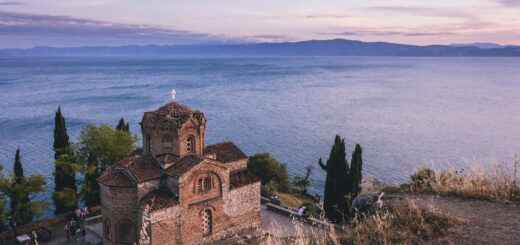
The country’s capital, Skopje, is a striking if somewhat idiosyncratic destination: the extraordinary “Skopje 2014” urban renovation project — which filled the city centre with neoclassical statues, monuments, fountains, and mock-Baroque facades at enormous expense — divided opinion between those who found it kitsch and those who found it charming. The old Ottoman Bazaar (Čaršija), one of the largest surviving Ottoman bazaars outside Turkey, and the hilltop Kale Fortress provide genuine historical substance alongside the new monuments. Beyond Skopje, Lake Ohrid (a UNESCO World Heritage Site for both its natural and cultural significance) is one of Europe’s deepest and oldest lakes, flanked by Byzantine churches, medieval monasteries, and charming waterfront towns.
North Macedonia is an affordable, undervisited destination with genuinely warm people and a fascinating cultural synthesis of Slavic, Albanian, Ottoman, and Byzantine heritage. Tourism is growing, and the country offers excellent value compared to neighbouring Croatia, Greece, or Bulgaria.
General Safety Overview
North Macedonia has a moderate crime rate. Violent crime against tourists is uncommon. Petty theft — pickpocketing, bag snatching — occurs in Skopje’s central areas, particularly around the Old Bazaar (Čaršija), Macedonia Square, and the main bus and train station area. Car break-ins are reported in tourist car parks. Relations between the Albanian minority (approximately 25% of the population) and the Macedonian majority are broadly stable, but tensions occasionally arise — monitor local news during any period of political sensitivity.
Demonstrations occur periodically in Skopje. While generally peaceful, they can become tense. Avoid protest gatherings and monitor local media.
Personal Safety and Crime Prevention
Exercise standard urban awareness in Skopje and in Ohrid town during peak summer season. The Old Bazaar in Skopje is a fantastic market and cultural experience but attracts pickpockets in its most crowded sections. Lake Ohrid is busy in summer with regional tourists, and beach areas see some bag theft.
Women travelling alone have generally reported feeling safe in North Macedonia, though conservative cultural attitudes in rural and traditional Muslim community areas mean that modest dress and confident, purposeful behaviour is advisable.
- Secure bags in the Old Bazaar and at Macedonia Square.
- Keep valuables out of sight in parked cars.
- Monitor local news for any political tensions or planned demonstrations.
- Use hotel safe for passports and excess cash.
Transportation Safety
Road conditions in North Macedonia are variable. Main highways connecting Skopje to the south (towards Greece) and west (towards Albania via Ohrid) are generally good. Secondary roads can be poorly maintained. Aggressive driving and speeding are common. The mountain roads approaching Mavrovo National Park and other highland areas require care.
Taxis in Skopje are inexpensive but overcharging is documented. The Taxi 5 and 15 call services operate reliable metered taxis in Skopje. Negotiating a price before entering any unmetered taxi is advisable.
- Use metered taxi services in Skopje; agree on fares before travel by street taxi.
- Drive carefully on secondary roads.
- The road from Skopje to Ohrid (A3 highway) is good quality and scenic.
Health and Medical Safety
Healthcare in North Macedonia is below Western European standards. Private clinics in Skopje provide better care than public hospitals. EU EHIC cards are not applicable (North Macedonia is not an EU member). Comprehensive travel insurance is essential. Tap water in Skopje and major cities is generally safe; bottled water is preferred by many visitors and is inexpensive.
- Comprehensive travel insurance required — EHIC does not apply.
- Bottled water is recommended.
- Bring adequate prescription medications.
Natural Hazards
North Macedonia is in a seismically active zone; the 1963 Skopje earthquake (magnitude 6.1) destroyed much of the city. Earthquakes are a genuine risk. The country is also subject to severe summer heat and periodic flooding along river valleys.
Digital and Financial Safety
The Macedonian denar (MKD) is the currency. Cash is widely used; card acceptance is improving in major cities but limited outside urban areas. ATMs are available in Skopje and Ohrid. Currency exchange at official offices or bank ATMs is safest.
- Carry MKD cash for travel outside Skopje and Ohrid.
- Use bank ATMs or official exchange offices.
- Notify your bank before travel.
Common Tourist Scams and How to Avoid Them
North Macedonia has few organised tourist scams. The following have been reported by visitors.
Taxi Overcharging in Skopje
Street taxis, particularly near the main train and bus stations, have been reported to quote tourists inflated fares.
How to Avoid: Use the Taxi 5 or Taxi 15 services (call or app). Always ensure the meter is running or negotiate a specific MKD price before entering.
Currency Exchange Shortchanging
Some exchange offices use rapid counting or distraction to return less money than the quoted rate implies.
How to Avoid: Exchange at official bank counters or licensed exchange offices. Count money carefully before leaving.
Old Bazaar Counterfeit Goods
The Old Bazaar sells a mix of genuine local crafts and cheap counterfeit goods (branded clothing, watches, handbags) that are presented as higher quality than they are.
How to Avoid: Purchase souvenirs and crafts from established local artisans. Be realistic about the quality and authenticity of market items at very low prices.
Cultural Awareness and Etiquette
North Macedonia has a complex cultural identity shaped by its position at the intersection of Slavic, Albanian, Ottoman, Greek, and Roman historical streams. The country’s name change and the related identity discussions are ongoing and sensitive. The relationship with Greece (over the “Macedonia” name) and with Bulgaria (over historical and linguistic questions) are politically charged. Navigate these topics with care.
The country has a strong café culture (kafana) and a relaxed Balkan rhythm of socialising. Greet with “Zdravo” (informal) or “Dobro utro/dne/veče” (good morning/day/evening). Albanian-speaking areas have their own cultural norms; respect for both communities is essential.
- “Fala” means thank you in Albanian (relevant in western areas); “Blagodaram” in Macedonian.
- Navigate identity and historical disputes with sensitivity.
- 10% tip is appreciated in restaurants.
- Dress modestly when visiting Orthodox churches and mosques.
Emergency Contacts
| Service | Number |
| Police | 192 |
| Ambulance | 194 |
| Fire | 193 |
| General Emergency | 112 |
Note: 112 is the general emergency number. Emergency services may have limited English. Having your location address in Macedonian can help responders.