How to Stay Safe in Kosovo
Introduction
Kosovo, Europe’s youngest state (declared independence from Serbia in 2008, recognised by approximately 100 countries including the US, UK, and most EU members), is a small, landlocked country in the Western Balkans that offers visitors a genuinely compelling combination of historic heritage, natural beauty, and remarkable resilience. Pristina, the youthful capital with its iconic “NEWBORN” sculpture (repainted each year to reflect the country’s progress), the UNESCO-listed Serbian Orthodox Patriarchate of Peć and the Visoki Dečani Monastery (protected by NATO/KFOR), the dramatic Rugova Canyon and the Sharr Mountains, and the historic Ottoman bazaar of Prizren make Kosovo a rewarding off-the-beaten-track destination.
Kosovo is not universally recognised as an independent state. Serbia does not recognise it; Russia and China also do not. This has practical implications for travellers: entering Kosovo via Serbia and then attempting to enter other countries (including Serbia on return) may be complicated by passport stamps. Travellers should research their specific nationality’s visa and entry requirements carefully.
Kosovo is generally safe for tourists. The presence of the NATO Kosovo Force (KFOR) since 1999 has been a stabilising factor. Violent crime against tourists is rare, and the people are notably welcoming to international visitors, particularly from Western countries whose governments supported Kosovo’s independence.
General Safety Overview
Kosovo has a moderate crime rate. Violent crime against tourists is uncommon. Petty crime — opportunistic theft, bag snatching — occurs at low to moderate levels in Pristina’s city centre, particularly around the central pedestrian zone (Mother Teresa Boulevard). Pristina’s taxi and nightlife areas warrant standard caution.
The most significant geopolitical consideration is the situation in northern Kosovo, particularly the area of northern Mitrovica and the four northern municipalities bordering Serbia, where ethnic Serb communities have clashed with Kosovo authorities over integration. There have been serious incidents including the September 2023 Banjska attack. The UK FCDO and US State Department advise heightened awareness in northern Kosovo, particularly North Mitrovica. Most tourist sites are well away from these areas.
Personal Safety and Crime Prevention
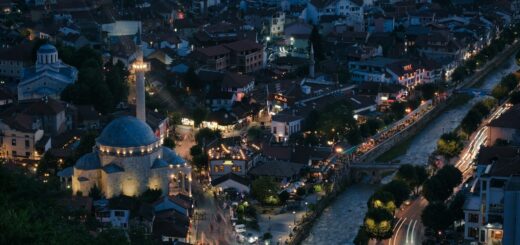
Exercise normal urban awareness in Pristina and Prizren. The areas around the Grand Bazaar and the main pedestrian zone in Pristina see most petty theft. Prizren’s historical old town is safe and a genuine highlight of any Kosovo visit — the Ottoman bridge, mosques, and hillside fortress create one of the Western Balkans’ most atmospheric townscapes.
The northern Mitrovica area should be approached with caution and only after checking current conditions with up-to-date government travel advisories. Attempting to enter Kosovo from Serbia via crossing points controlled by Kosovo authorities is possible for most nationalities, but the Serbia/Kosovo entry situation requires careful advance planning.
- Secure bags in Pristina’s pedestrian centre.
- Check current conditions in northern Kosovo before travel to that region.
- Research Serbia-Kosovo border crossing implications for your specific passport before travel.
- The presence of NATO KFOR is a stabilising factor; KFOR is visible throughout Kosovo.
Transportation Safety
Kosovo’s road network is basic but improving. The main highway connecting Pristina to the Albanian border (the “Patriot Highway”) is of good quality. Secondary roads are often poor. Driving standards are inconsistent, and Kosovo has above-average road accident rates for the region.
Taxis in Pristina are relatively affordable but unmetered; tourist overcharging occurs. The RideKos app provides more transparent pricing. Buses are the primary intercity transport mode and are cheap and reasonably reliable. Kosovo has no railway passenger service.
- Use the RideKos app for taxis in Pristina; agree on fares before travelling by street taxi.
- Drive carefully on secondary roads — quality is variable.
- Buses connect major towns reliably and cheaply.
Health and Medical Safety
Healthcare in Kosovo is limited. Pristina’s University Clinical Centre of Kosovo is the main hospital, but quality is below Western standards. Private clinics in Pristina provide better care for non-emergency issues. Comprehensive travel insurance with medical evacuation is strongly recommended.
Kosovo is not an EU member, so EHIC cards do not apply. Bottled water is widely available and recommended outside major hotels.
- Purchase comprehensive travel insurance with medical evacuation.
- Drink bottled water.
- Carry adequate prescription medications — availability is limited.
Natural Hazards
Kosovo is subject to periodic earthquakes as part of the seismically active Balkans region. The Sharr Mountains offer excellent hiking but require proper preparation and weather awareness. Mountain weather changes rapidly, and trails are not always well-marked by Western standards.
Digital and Financial Safety
Kosovo uses the euro (despite not being an EU member). Card acceptance is growing but cash is still widely used, particularly in smaller businesses, markets, and rural areas. ATMs are available in Pristina and major towns. Internet access is reasonably good in cities.
- Carry euro cash, especially for rural and smaller-town travel.
- Card payments are increasingly accepted in Pristina.
- Mobile coverage is reasonable in main towns; limited in mountains.
Common Tourist Scams and How to Avoid Them
Kosovo is not known for aggressive tourist scams. The following minor issues have been reported.
Taxi Overcharging in Pristina
Unmetered taxis in Pristina overcharge tourists unfamiliar with standard fares. Airport taxi overcharging is particularly reported.
How to Avoid: Use the RideKos or Bolt apps. If using street taxis, agree on a specific euro price before entering the vehicle.
Currency Confusion Exploitation
Kosovo uses euros, but some visitors are confused by this. Some vendors or informal services try to take advantage of currency confusion — particularly tourists arriving from Serbia where a different currency is used.
How to Avoid: Kosovo uses the euro at standard European denominations — there is no special or local variant. Be alert to any attempts to exchange money at non-standard rates.
Unofficial Guides at Religious Sites
At the Visoki Dečani Monastery, the Patriarchate of Peć, and Gračanica Monastery — all of which are of enormous religious and cultural significance and protected by KFOR — unofficial individuals sometimes offer to guide tourists.
How to Avoid: These are active religious communities. Approach respectfully and independently. Official information is provided at the sites. KFOR security is present at the main protected monasteries.
Cultural Awareness and Etiquette
Kosovan Albanians are broadly secular in lifestyle (influenced by both the Islamic heritage and the more secular culture of Albanian identity) while retaining Muslim cultural traditions. Dress modestly at mosques. Kosovo’s people have experienced enormous trauma from the 1998–1999 war and its aftermath; approaching the subject of the war with sensitivity and genuine interest in understanding Kosovo’s experience is appreciated.
Kosovo’s relationship with the US is particularly warm — the country named a major boulevard “Bill Clinton Boulevard” (with a larger-than-life statue) and a shopping centre after Hillary Clinton — reflecting the US role in ending the 1999 conflict. This warmth extends to most Western visitors.
- Dress modestly at mosques.
- Kosovo’s national trauma from 1998–1999 is recent history for many residents — approach it with respect.
- Western travellers are generally very warmly received.
- The coffee culture in Pristina (kafene) is central to social life.
Emergency Contacts
| Service | Number |
| Police | 192 |
| Ambulance | 194 |
| Fire | 193 |
| General Emergency | 112 |
Note: 112 also works as a general emergency number. KFOR (NATO Kosovo Force) can be contacted in emergencies involving security threats: +381 38 503 010.