How to Stay Safe in Serbia
Introduction
Serbia, a landlocked country in the heart of the Western Balkans, is an increasingly popular destination for travellers seeking vibrant nightlife, Ottoman and Byzantine heritage, and off-the-beaten-path experiences. Belgrade, the capital, has developed a reputation as one of Europe’s top party cities, while Novi Sad, Niš, and the countryside offer cultural and natural rewards to those who venture beyond the capital.
Serbia is generally safe for tourists, though crime rates in Belgrade are higher than in smaller towns. Political sensitivities — particularly around Kosovo — remain a factor in certain contexts, and travellers should be aware of the country’s complex regional relationships. With basic precautions, the vast majority of visitors enjoy trouble-free stays.
General Safety Overview
Serbia’s crime rate is moderate by European standards. Pickpocketing, bag-snatching, and tourist-targeted scams are the primary concerns in Belgrade’s Stari Grad (Old Town) and around major transport hubs. Violent crime against tourists is uncommon but not unheard of, particularly in the early hours after Belgrade’s famous nightlife.
Football-related violence occasionally flares around major matches; avoid the areas near stadiums on match days, particularly when rivals FK Crvena Zvezda (Red Star) and FK Partizan are playing. Demonstrations around the National Assembly can occasionally turn confrontational.
Personal Safety & Crime Prevention
Keep valuables secure in crowded areas including Knez Mihailova Street, Skadarlija, and on public transport. A money belt is advisable in busy tourist zones. Avoid displaying expensive cameras or jewellery, particularly after dark.
The Zemun district, though gentrifying, still has pockets of organised crime activity — exercise caution after dark. In general, Belgrade’s city centre is safe for walking even late at night, particularly in well-lit tourist areas.
Transportation Safety
Taxis are a common scam vector in Serbia. Unlicensed cabs frequently overcharge tourists, particularly outside Nikola Tesla Airport and near Belgrade’s major hotels. Always use the Taxi app (Pink Taxi, Car:Go, or Uber) to pre-book and see the price before getting in.
Serbian roads have a high accident rate — the country consistently ranks among Europe’s most dangerous for road fatalities. Drive defensively, watch for speeding local drivers, and avoid driving at night outside cities where roads are poorly lit and animals may stray onto the road.
Health & Medical Safety
Medical facilities in Belgrade are adequate, though public hospitals are underfunded and overcrowded. Private clinics — including the Bel Medic and Euromedik networks — offer higher standards of care and English-speaking staff. Travel insurance with medical evacuation coverage is strongly recommended.
Tap water is generally safe in cities. In rural areas, drink bottled water. No specific vaccinations are required beyond routine ones, though hepatitis A and typhoid are recommended for extended rural visits.
Natural Hazards
Serbia experiences hot, dry summers and cold, snowy winters. Flooding has affected the Danube and Sava river corridors in recent years. Check seasonal flood warnings if visiting in spring.
Air quality in Belgrade can be poor in winter due to coal heating and traffic. Those with respiratory conditions should monitor air quality indices and consider wearing a mask on high-pollution days.
Digital & Financial Safety
Serbia uses the Serbian dinar (RSD), though many tourist-facing businesses also accept euros. Currency exchange offices (menjačnica) are widely available; avoid unlicensed street exchangers who frequently short-change tourists. Use ATMs affiliated with major banks like Banca Intesa, Raiffeisen, or UniCredit.
Wi-Fi is widely available in cafés and hotels. Exercise standard caution on public networks. Card skimming at ATMs has been reported — inspect the card reader before use and cover your PIN.
Common Tourist Scams
Airport & Station Taxi Overcharge
Unlicensed taxi drivers at Nikola Tesla Airport and Belgrade’s bus and train stations approach arriving passengers offering ‘fixed price’ rides into the city that are four to ten times the metered rate.
How to Avoid: Book a taxi through the official taxi apps (Car:Go, TAXI Beograd) before leaving the arrivals hall, or use the licensed taxi rank with metered vehicles. Confirm the meter is running before departure.
Currency Exchange Short-Change
Some exchange bureaux — particularly small unlicensed offices near tourist areas — advertise a high exchange rate on a board, then use sleight of hand or complex counting to return less cash than owed.
How to Avoid: Use exchange offices inside banks or those affiliated with major brands. Count your money carefully before leaving the counter and verify the rate matches what was advertised.
Bar & Nightclub Bill Shock
Certain bars and clubs in Belgrade — particularly those where a stranger invites you from the street — present wildly inflated bills at the end of the night, sometimes backed by intimidating staff.
How to Avoid: Ask for a menu with prices before ordering. Choose venues based on recommendations from your hotel or verified travel platforms. Be especially wary if a new acquaintance enthusiastically steers you toward a specific venue.
Street ‘Three-Card’ & Shell Games
Around Terazije and the main pedestrian zones, shell game operators set up small tables with apparent gambling games. The games are rigged; apparent early winners are confederates planted to lure in genuine tourists.
How to Avoid: Never engage with street gambling of any kind. Walk past without stopping even if the game looks easy or other bystanders seem to be winning.
Fake Police Officer
Individuals posing as plainclothes police officers approach tourists, claiming they need to ‘inspect’ wallets for counterfeit currency or drugs. After examining the wallet they pocket cash or card details.
How to Avoid: Real Serbian police will always have a uniformed colleague present for such checks. Insist on being taken to the nearest police station if approached. Do not hand over your wallet; offer to walk with them to the station instead.
Friendship Bracelet / Rose Seller
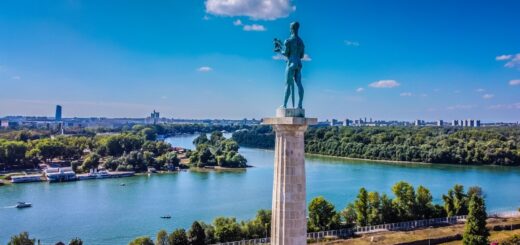
Particularly in Skadarlija and near the Kalemegdan fortress, vendors aggressively place items in tourists’ hands or onto their wrists and then demand payment, becoming confrontational if refused.
How to Avoid: Keep hands at your sides and firmly but politely decline. Say ‘ne, hvala’ (no, thank you) and keep walking without engaging further or accepting any item.
Rigged Amusement / Sports Betting Shop
Serbia has a high density of betting shops and amusement arcades; some near bus stations target tourists by offering ‘easy’ games that are secretly controlled to ensure the house always wins.
How to Avoid: Avoid all unlicensed amusement games and street gambling. Licensed sports betting shops are legal but have no special tourist-friendly odds — treat them as entertainment with expected losses, not a money-making opportunity.
Cultural Awareness & Etiquette
Serbia is a proud nation with complex history. Avoid initiating conversations about the Kosovo issue, the 1990s wars, or NATO’s 1999 bombing campaign unless you know the person well — these remain raw and politically charged topics. Listen more than you speak on such subjects.
Orthodox Christian customs are important in Serbia. On religious holidays, expect churches to be crowded and dress modestly when visiting. Hospitality is highly valued — accepting an offered drink or coffee is considered good manners even if you only take a small sip.
Emergency Contacts
| Service | Number |
| Police | 192 |
| Ambulance | 194 |
| Fire | 193 |
| General Emergency | 112 |
Note: 112 is the pan-European emergency number and works from all Serbian networks. English-speaking operators may be available on 112; for specialist services use the direct numbers above.