How to Stay Safe in Ukraine
Introduction
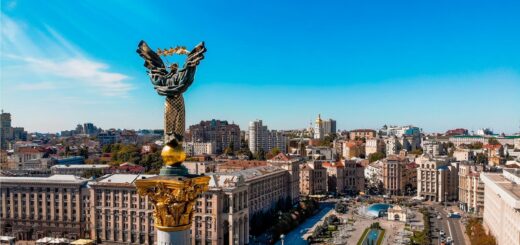
Ukraine, the largest country located entirely within Europe, was for many years an emerging tourist destination of considerable richness. Kyiv, with its golden-domed monasteries and vibrant cultural scene; Lviv, with its beautifully preserved Austro-Hungarian old town; Odessa, with its Italianate architecture and Black Sea beaches; and the Carpathian Mountains all attracted growing numbers of international visitors.
Since Russia’s full-scale invasion in February 2022, Ukraine has been in a state of active armed conflict. The security situation presents extreme danger to all visitors. Virtually all governments — including those of the United States, United Kingdom, European Union member states, Australia, and Canada — issue their strongest available advisory against travel to Ukraine. This document is provided for informational purposes only. All travel to Ukraine should be deferred until the security situation changes fundamentally.
Current Security Situation
As of early 2026, active hostilities continue across large parts of eastern and southern Ukraine. Russian missile and drone strikes have targeted infrastructure — including power stations, water facilities, transport links, and residential buildings — throughout the country, including Kyiv and Lviv. No part of Ukraine is exempt from the threat of aerial attack.
The front line as of 2025 ran through parts of Donetsk, Zaporizhzhia, Kherson, and Kharkiv oblasts. Russian forces occupied these regions partially or entirely. The Crimean Peninsula, annexed by Russia in 2014, remains inaccessible to Ukrainian authorities. Travel to occupied or front-line areas by civilians is extremely dangerous and potentially fatal.
If You Must Travel: Essential Precautions
If there is an absolute necessity to travel to areas of Ukraine not directly under active military conflict (such as Lviv or parts of western Ukraine), the following minimum precautions apply: register with your embassy immediately upon arrival; identify the location of air-raid shelters in your immediate vicinity; download the Ukrainian air-raid alert app (Повітряна тривога / Air Alert); carry multiple days of food, water, medications, and power banks; and have a clear evacuation plan.
Journalists, humanitarian workers, and others who must operate in Ukraine should consult specialist security advisers and follow the protocols of their organisations. The ICRC and UNHCR maintain presence in country under specific security arrangements that are not applicable to ordinary tourists.
Landmine & UXO Hazard
Ukraine is among the most heavily mined countries in the world as a result of the conflict. Landmines and unexploded ordnance (UXO) are present across vast areas of eastern and southern Ukraine, including fields, forests, roadsides, and even urban areas that were near the front line. Do not enter any area that has not been confirmed cleared by Ukrainian authorities.
Never touch or approach unfamiliar objects on or in the ground. If you discover a suspicious object, move away carefully and report it to authorities. Post-conflict clearance will take decades — this hazard will persist long after any potential ceasefire.
Health & Medical Safety
Ukraine’s healthcare system has been severely stressed by the conflict. Major hospitals in eastern regions have been damaged or destroyed. Even in Kyiv, regular power outages affect hospital operations. Medical evacuation from conflict zones is extremely difficult. For anyone who must be in Ukraine, carrying comprehensive first-aid supplies and a detailed medical evacuation insurance plan is essential.
Standard pre-travel vaccinations for Ukraine include hepatitis A and B, typhoid, MMR, and tetanus. Drinking only bottled water in all areas is recommended, as water infrastructure has been affected in conflict zones.
Natural Hazards
Flooding and extreme winter conditions exist in Ukraine independent of the conflict. The deliberate destruction of the Kakhovka Dam in June 2023 caused catastrophic flooding along the Dnipro River, displacing hundreds of thousands and contaminating water sources. Environmental damage from the conflict continues to pose health risks in affected areas.
Winters in Ukraine are severe, particularly in the east and north. Fuel and heating shortages caused by infrastructure damage have increased the risk of cold-related illness in civilian populations.
Digital & Financial Safety
Ukraine uses the hryvnia (UAH). International banking access is restricted, and ATM availability in conflict-affected areas is unreliable. Carry sufficient hard currency (US dollars or euros are widely accepted in western Ukraine) if you must travel.
Digital communications in Ukraine are monitored. Exercise caution with what you communicate electronically. Use encrypted apps for sensitive communications. Physical security of devices and documents is a significant concern in areas with potential for checkpoints.
Common Tourist Scams
Fraudulent Evacuation or Visa Services
Scammers target people trying to leave Ukraine or gain legal entry, offering fraudulent evacuation services, fake visas, or border-crossing assistance for large fees — and delivering nothing.
How to Avoid: Use only official government channels for visa and border information. Contact your country’s embassy in Kyiv (if operational) or its nearest operational embassy for authoritative guidance. Do not pay private individuals to ‘arrange’ border crossings.
Fake Charity & Relief Fund Fraud
The Ukraine conflict has generated enormous genuine international charitable giving, which has also attracted fraudulent fundraising operations worldwide.
How to Avoid: Donate only to verified charities with transparent reporting (UNHCR, ICRC, MSF, etc.) through their official websites. Treat any solicitation on social media with great scepticism and verify organisations independently.
Counterfeit Currency in Border Regions
In border areas with Poland, Slovakia, and Hungary, counterfeit Ukrainian hryvnia and foreign currency have been reported in informal exchange.
How to Avoid: Exchange currency only through official bank channels or licensed exchange offices. Do not exchange money with individuals in informal settings near border crossings.
Accommodation Fraud for Arriving Refugees & Travellers
People arriving in Ukraine (and Ukrainian refugees arriving in neighbouring countries) have been targeted by fraudulent accommodation offers that collect payments without providing genuine lodging.
How to Avoid: Book accommodation only through verified platforms with genuine reviews. For humanitarian workers, use accommodation vetted by your organisation. Exercise extreme caution with offers from strangers at border crossings or train stations.
Cultural Awareness & Etiquette
Ukraine has a rich and proud cultural identity that Ukrainians have asserted strongly in recent years, including a movement away from Russian cultural influence. Using Ukrainian rather than Russian language — even a few words — is greatly appreciated. The Ukrainian language, while related to Russian, is distinct and has its own rich literary and cultural tradition.
Sensitivity around the ongoing conflict and its origins is essential. Do not make light of the war, express ambivalence about Ukrainian sovereignty, or use language that echoes Russian state narratives. Ukrainians across the country are living through an existential national experience.
Emergency Contacts
| Service | Number |
| Police | 102 |
| Ambulance | 103 |
| Fire | 101 |
| General Emergency | 112 |
Note: In active conflict areas, emergency services may be unavailable or overwhelmed. 112 is the pan-European number. For life-threatening emergencies, contact your embassy immediately if services are unreachable. Air-raid alert app: ‘Air Alert Ukraine’ (Повітряна тривога).