How to Stay Safe in Laos
1. Introduction
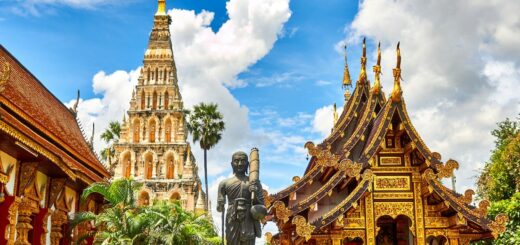
Laos is Southeast Asia’s only landlocked country and one of its most serene — a place of unhurried Buddhist monasteries, French colonial architecture in Luang Prabang (a UNESCO World Heritage City), dramatic karst landscapes around Vang Vieng, the 4,000 Islands (Si Phan Don) in the deep south, the sacred Pak Ou Caves, Kuang Si waterfalls, and the Plain of Jars. Laos attracts travellers seeking something quieter and more authentic than its more developed neighbours Thailand and Vietnam.
Laos borders China (north), Vietnam (east), Cambodia (south), Thailand (west), and Myanmar (northwest). The capital is Vientiane. The currency is the Lao Kip (LAK), though Thai Baht and US Dollars are widely accepted. The population is approximately 7.5 million. The official language is Lao. English is spoken in tourist areas.
| TIP — Overall Safety: Laos is one of Southeast Asia’s safer countries for tourists. Violent crime against visitors is rare. The main concerns are UXO from the Vietnam War era, traffic accidents, health risks, and isolated incidents of petty crime. |
2. Security Landscape
2.1 UXO — Unexploded Ordnance
| WARNING — UXO Danger: Laos is the most heavily bombed country per capita in history — the US dropped more than 2 million tonnes of bombs during the Vietnam War (1964-1973), of which approximately 30% failed to detonate. UXO remains in the ground across much of the country, particularly in Xieng Khouang Province (Plain of Jars), Savannakhet, Salavan, and Sekong provinces. Every year, civilians (and occasionally tourists) are killed or injured by UXO. NEVER step off marked paths in rural areas of affected provinces. |
2.2 Crime
Overall crime rates are low. Theft from guesthouses, bag snatching, and pickpocketing occur in tourist areas (Luang Prabang’s Night Market, Vientiane’s That Luang area, Vang Vieng). Drink spiking has been reported in Vang Vieng’s bar scene. Motorbike theft is the most commonly reported crime in Luang Prabang and Vang Vieng.
2.3 Vang Vieng
| WARNING — Vang Vieng Party Scene: Vang Vieng has a reputation for alcohol- and drug-fuelled tourism. Tourists have died from alcohol poisoning, tubing accidents, falls, and drug-related incidents. ‘Happy’ shakes, pizzas, and other products containing unknown substances are sold — consumption is highly dangerous. Several tourist deaths occur annually in Vang Vieng. |
3. Safe & Unsafe Areas
| TIP — Safe for Tourists: Luang Prabang, Vientiane (capital), Vang Vieng (with caution re: party scene), Si Phan Don (4,000 Islands), Pakse, Champasak, Nong Khiaw, Muang Ngoi. |
| WARNING — Exercise Caution: Remote rural areas in Xieng Khouang, Savannakhet, Salavan, Sekong — UXO risk. Never step off marked paths. Border areas with Vietnam and China in the north (drug trafficking routes exist in the Golden Triangle periphery). Phongsali Province is remote with limited services. |
4. Transportation
Wattay International Airport (Vientiane) and Luang Prabang International Airport serve the main tourist hubs. The Boten-Vientiane high-speed railway (Laos-China Railway) opened in 2021, connecting Vientiane to Luang Prabang in 2 hours and to Boten (Chinese border) in under 4 hours. Slow boats on the Mekong River between Huay Xai and Luang Prabang (2 days) are a popular, scenic option. Buses serve intercity routes at low cost. Renting motorbikes is popular but accident rates are high — helmets are mandatory.
| WARNING — Road Safety: Road accidents are a leading cause of tourist injury and death in Laos. Roads outside main cities are poorly maintained. Night driving is particularly hazardous. Helmets are required for motorbike riders — enforce this for yourself even if locals do not comply. |
5. Health & Medical
Medical facilities in Laos are extremely limited. Vientiane has Mahosot Hospital and some private clinics (Lao-French Clinic, Australian Clinic) but standards are basic. Serious conditions require evacuation to Thailand (Udon Thani or Khon Kaen, 3-4 hours). Medical evacuation insurance is essential. Key health risks: malaria (present in forested and rural areas — take prophylaxis if venturing off the tourist trail); dengue (year-round); typhoid; hepatitis A; schistosomiasis (freshwater contact, particularly in southern rivers — avoid swimming in slow-moving rivers); rabies (animal bite risk — seek immediate treatment).
6. Common Scams & Threats
| Scam Name | How It Works | How to Avoid It |
| Tuk-Tuk Overcharging | Tuk-tuk drivers in Vientiane and Luang Prabang quote tourist prices 3-5x the local rate. | Negotiate fares firmly before departure. Research standard fares. Short in-city rides should cost LAK 20,000-40,000. |
| Temple Closed Scam | Tuk-tuk drivers claim your target temple is closed and offer to take you to a cousin’s shop. | Verify temple hours independently. Pha That Luang and other major temples rarely close unexpectedly. |
| Happy Food Products | Restaurants and shops in Vang Vieng sell food and drinks containing opium, marijuana, or other substances. | Do not order anything described as ‘happy.’ Unknown substances in food or drinks can cause serious medical emergencies. |
| Slow Boat Overpricing | Travel agents quote significantly above the standard price for Mekong slow boat tickets. | Buy tickets at the official slow boat ticket office in Huay Xai or Luang Prabang. Fixed prices are posted. |
| Currency Confusion | Vendors quote prices in Kip but charge in Baht or Dollars at unfavourable rates. | Clarify which currency is being used before agreeing to any price. |
| ATM Skimming | ATM skimming devices reported at some machines in Vientiane. | Use ATMs inside banks. Check for tampering. Cover PIN entry. |
| Fake Tour Guides | Unlicensed guides offer cheaper tours at popular sites like Kuang Si and Pak Ou Caves. | Use licensed guides registered with the Lao National Tourism Administration (LNTA). |
| Guesthouse Commission Scam | Tuk-tuk drivers earn commissions to take tourists to specific guesthouses, not the ones requested. | Pre-book accommodation and insist on being taken to your booked address. |
7. Legal & Cultural Considerations
Laos is a one-party communist state governed by the Lao People’s Revolutionary Party (LPRP). Political commentary critical of the government is illegal. Drug laws are severe — drug trafficking carries the death penalty. Marijuana is illegal despite its casual presence in tourist areas. Sexual relations between foreign nationals and Lao citizens outside of marriage were historically restricted (this law has been inconsistently enforced but legal risk remains). Respect Buddhism — dress modestly at temples, remove shoes before entering, do not touch monks (women especially must not touch or hand anything directly to monks).
8. Emergency Contacts
| Service | Number / Details |
| Police Emergency | 191 |
| Ambulance | 195 |
| Fire Service | 190 |
| Lao-French Clinic Vientiane | +856 21 214 150 |
| Mahosot Hospital Vientiane | +856 21 214 023 |
| UK Embassy Vientiane | +856 21 267 000 |
| US Embassy Vientiane | +856 21 487 000 |
| Australian Embassy Vientiane | +856 21 353 800 |
| UXO Lao (reporting) | +856 21 215 584 |
9. Safety Checklist
- Never step off marked paths in UXO-affected provinces — report finds to UXO Lao
- Avoid all ‘happy’ food and drink products — unknown substances risk life
- Take malaria prophylaxis if visiting forested or rural areas
- Purchase comprehensive medical evacuation insurance — nearest good hospital is in Thailand
- Wear a helmet on motorbikes — mandatory and life-saving
- Negotiate tuk-tuk fares before departure
- Use bottled or purified water only
- Carry oral rehydration salts and diarrhoea medication
- Respect Buddhist temples — dress modestly, remove shoes
- Register with your embassy before remote travel