How to Stay Safe in Equatorial Guinea
1. Introduction
Equatorial Guinea is one of Africa’s smallest and least-visited countries—a unique nation consisting of a mainland territory (Río Muni, bordering Cameroon and Gabon) and an island (Bioko Island), where the capital Malabo is located. Despite being Africa’s third-largest oil producer per capita, with high per-capita GDP figures, extreme inequality means oil wealth has not improved most citizens’ lives. The country has been ruled by President Teodoro Obiang Nguema since 1979, making him one of the world’s longest-serving heads of state.
Equatorial Guinea is extraordinarily difficult to visit—visas are hard to obtain, tourism infrastructure is extremely limited, and most visitors are oil industry professionals. Bioko Island has significant biodiversity including endemic species and sea turtle nesting beaches. The mainland has forest wildlife. For the rare tourist who makes it, security is actually relatively stable compared to neighbours, though political repression is significant.
| ⚠ Authoritarian Environment: Equatorial Guinea is an authoritarian state with documented human rights abuses. Freedom of press and political expression are severely curtailed. Tourists must be aware that anything construed as political activity, criticism of the government, or association with opposition figures can result in detention. |
2. Security Landscape
The country is not at war and street crime, while present, is not at the levels seen in larger West and Central African cities. Malabo and Bata (the mainland capital) have petty crime—pickpocketing and opportunistic theft—particularly around markets and ports. Armed robbery is less common than in the region generally.
The main security risks come from the state rather than criminals. Arbitrary detention, surveillance, and harassment of perceived critics or dissidents are well documented. Security forces operate with impunity. Night movement in either city should be approached with standard caution.
| ⚠ Photography Restrictions: Photography is severely restricted. Do not photograph government buildings, presidential palaces, military installations, the port, or infrastructure. This is taken very seriously—camera confiscation and detention follow. This is even stricter than most Central African nations. |
3. Practical Travel Information
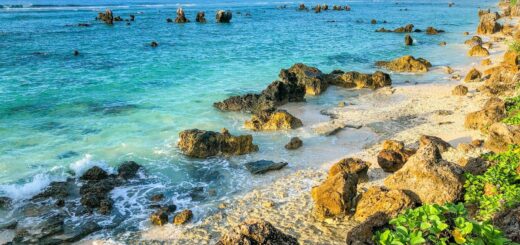
Malabo (on Bioko Island) has the main international airport, served by flights from Addis Ababa, Madrid, and Casablanca. The island’s forested interior has endemic primates and birds. Pico Basile (3,008m) is accessible with a guide. The main beaches (Arena Blanca, Ureca on the south coast) are beautiful but remote.
The mainland (Bata) is connected by occasional flights and boat services. The road from Bata south toward Gabon passes through rainforest with wildlife. Infrastructure is surprisingly good in places due to oil-funded construction, but varies widely off the main routes.
| ✔ Visa Difficulty: Obtaining a visa for Equatorial Guinea is notoriously difficult and expensive. Start the process months in advance. Contact the nearest embassy directly—there is no reliable online application system. A letter of invitation from a contact in the country greatly helps. |
4. Health & Medical Safety
Malaria is endemic throughout Equatorial Guinea. Yellow fever vaccination is required. Typhoid, hepatitis, and other tropical diseases are present. Medical facilities are poor—even in Malabo, public hospitals are limited; some private clinics serve the oil industry community. Medical evacuation is the realistic option for serious illness—to Douala, Libreville, or Europe.
Water quality is unreliable. Use bottled water. Bioko Island’s southern coast (Ureca) is one of the most remote locations in Central Africa—do not go without experienced guides and comprehensive supplies, as there is no rescue infrastructure.
| ⚠ Ureca Beach Remoteness: Ureca is one of the world’s most important sea turtle nesting sites. Reaching it requires a long trek or boat. There are no facilities and no rescue services. Go only with experienced local guides and full supplies. |
5. Common Scams & How to Avoid Them
| Scam Name | How It Works | How to Avoid It |
| Police Document Checks | Officers demand to see passports and claim document problems solvable with payment. | Carry certified copies. Request official documentation of any issue. Ask to contact your embassy. |
| Port / Airport Hustlers | Individuals at Malabo port and airport offer assistance then demand large fees. | Arrange all logistics through your hotel or employer in advance. Decline unsolicited help. |
| Overpriced Taxis | Drivers charge foreigners many times the local rate. | Ask your hotel for standard fares for common routes before taking a taxi. |
| ‘Official’ Tour Overcharging | Guides near heritage or wildlife sites charge very high fees without official credentials. | Book guides only through your hotel or verified operators. |
| Currency Manipulation | Money changers shortchange tourists unfamiliar with CFA francs. | Exchange only at official bank branches. |
6. Legal & Political Considerations
Equatorial Guinea is one of Africa’s most repressive states. Any perceived criticism of President Obiang or his government can result in detention. Do not discuss politics with strangers. LGBTQ+ activity, while not explicitly criminalised in the penal code, exists in an environment of severe social and official hostility. Drug possession carries significant penalties.
7. Emergency Contacts
| Service | Number / Info |
| Police (Malabo) | +240 333 093 300 |
| Hospital La Paz Malabo | +240 333 093 500 |
| Spanish Embassy Malabo | +240 333 092 020 |
| French Embassy Malabo | +240 333 092 005 |
| US Embassy (Yaoundé handles EG) | +237 222 20 15 00 |
8. Pre-Departure Checklist
- Begin visa application process well in advance—this can take months
- Obtain Yellow Fever vaccination certificate
- Begin antimalarials before departure
- Purchase travel insurance with evacuation coverage
- Register with your embassy (likely done via Cameroon or Gabon mission)
- Arrange all accommodation and transport before arrival
- Review photography restrictions and comply strictly
- Pack comprehensive first-aid kit and water purification
- Download offline maps for Bioko Island
- Carry ample cash in CFA francs—ATM availability is very limited